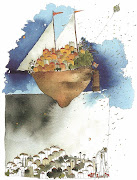
According to the ancient Hindus, we are now in a period known as "kali-yuga" or the Iron Age. It is known for its breakdown in spirituality, and the complete degeneracy of the human race. Kali-yuga is characterized by a shift in human attitudes away from intelligence, and traditional values towards lust, greed and the dominance of money. This degeneracy is instrumentalized by the a secretive group of the powerful to subjugate and enslave the majority of mankind with among other things, promiscuous sex. (read:pop culture+globalization). Abortion, the tolerance of homosexuality, and transvestitism are considered degenerate practices. In particular, abortion is a sign of the breakdown in the traditional role for women, who during the kali-yuga become greedy prostitutes. It is amazing just how closely our western societal breakdown has followed the descriptions of kali-yuga and the secret war to ensalve mankind by th One-worlders, like Bernard Baruch.
RH: Well. In my ignorance I read up about kali yuga, and, as usual, found the most lucid acount in Wikipedioa:
According to most interpretations of Hindu scriptures, including the Vedas, the Kali Yuga (lit. Age of Kali , also known as Iron Age) began at the end of Krishna's bodily lifespan (approximately 5100 years ago, 3102 BCE) and will last exactly 432,000 years placing its conclusion in the year 428,899 CE (it began with a year 0). Kalki, the 10th and final avatar of Vishnu, is expected to appear at this time, riding a white horse and wielding a flaming sword with which to strike down the wicked. Kali Yuga is the last of four Yugasupon its conclusion, the world will 'reboot' into a new Satya Yuga (Golden Age). This involves the end of the world as we know it and the return of Earth to a state of paradise. Kali Yuga began at midnight (00:00) on 18 February 3102 BCE according to the Surya Siddhanta, which is an astronomical treatise that forms the basis of all Hindu and Buddhist calendars. Kali Yuga is sometimes referred to as the Iron Age because it was also the time when forging iron was discovered. Throughout the Kali Yuga, human civilisation degenerates further.
RH:Christopher is trying to show that the present evil of globalization is part of kali yuga, the period which began in 3102 BCE and will last until 428,899 CE. In other words, the world went to the dogs a very long time ago, long before the present dogs of globalization and pop culture. While I cannot make sense of Christopher's chronology, I agree with his argument about pop culture as a manifestation of the contemporary world, but I do not bring the Vedas into the argument. I am surprised that Vishnu will return on a white horse, like Napoleon. I prefer Christ's donkey. Perhaps the white horse is the source of the four horses of the Apocalypse, but they were horses of a different color.
23.11.05
How a White House "Cabal" Hijacked U.S. Foreign Policy, by Colonel LAWRENCE WILKERSON
COL. LAWRENCE WILKERSON: Well, it just reinforces my position that we cannot afford to be, as a country, as a people, seen as tolerating torture in any way, fashion or form, or unusual and degrading punishment as the International Convention Against Torture delineates it. It just undercuts our image. It undercuts our credibility. More important than that, it undercuts our political values and who we are.
And let me just give you a broader context for why that is so important. This is not a conflict of bombs, bullets and bayonets. This is not a conflict where the military should be the leading instrument. Yes, we had to go to Afghanistan because we had no choice. Al-Qaeda was resident there. The people who actually plotted and the people who planned the 9/11 tragedy were resident there. We had to go after them. The Taliban would not give them up. We had to go after them. The military instrument was appropriate there.
But the military instrument is not appropriate to this wider conflict, because this wider conflict is a conflict of ideas. It is our ideas, which are the political values upon which America is based, indeed, upon western liberalism is based, and the ideas of Osama bin Laden and Abu Musab al-Zarqawi and other evil people like those. And if we think that this conflict can be won with bombs, bullets and bayonets, we are sadly mistaken. I was a soldier for 31 years. You do not fight ideas with bombs, bullets and bayonets. You fight them with your ideas, because your ideas are better. And so, when you detract from the better of your ideas, when you give people in the world, especially the millions of moderate Muslims who might be sitting on the fence right now in this conflict, when you give them reason to doubt your credibility, to doubt your ideas, give them reason to criticize you, you're actually defeating yourself. And we just can’t continue to do that sort of thing, because this is a war of ideas, and we're going to win it with our ideas, triumphant over the ideas of people like bin Laden and Zarqawi.
And let me just give you a broader context for why that is so important. This is not a conflict of bombs, bullets and bayonets. This is not a conflict where the military should be the leading instrument. Yes, we had to go to Afghanistan because we had no choice. Al-Qaeda was resident there. The people who actually plotted and the people who planned the 9/11 tragedy were resident there. We had to go after them. The Taliban would not give them up. We had to go after them. The military instrument was appropriate there.
But the military instrument is not appropriate to this wider conflict, because this wider conflict is a conflict of ideas. It is our ideas, which are the political values upon which America is based, indeed, upon western liberalism is based, and the ideas of Osama bin Laden and Abu Musab al-Zarqawi and other evil people like those. And if we think that this conflict can be won with bombs, bullets and bayonets, we are sadly mistaken. I was a soldier for 31 years. You do not fight ideas with bombs, bullets and bayonets. You fight them with your ideas, because your ideas are better. And so, when you detract from the better of your ideas, when you give people in the world, especially the millions of moderate Muslims who might be sitting on the fence right now in this conflict, when you give them reason to doubt your credibility, to doubt your ideas, give them reason to criticize you, you're actually defeating yourself. And we just can’t continue to do that sort of thing, because this is a war of ideas, and we're going to win it with our ideas, triumphant over the ideas of people like bin Laden and Zarqawi.
19.11.05
Balada Triste para o 1 º de Dezembro, por André Bandeira

(Fernando Botero, mujer llorando)
1 – Não chores Maria, Mariazinha de Portugal, porque já não tens nada, nem um tostão ( só tens o cartão). Não chores sobre a enxada, não quero ver a tua cara triste ao lado da figueira partida pelo relâmpago. Tantos anos a trabalhar, a bulir, a limpar chãos, a virar frangos. Tens as mãos secas. Tudo só para poderes ter uma casinha, e dois filhitos e um pouco de piedade do teu homem. Talvez umas fériazitas na praia e um Natal feliz.
Não chores Maria, Mariazinha de Portugal, que já nem há horizonte para crestares mais a tua pele modesta e humilde na esperança de amealhares uns tostões.
Segura, segura o teu filhinho, não vá ele comer a granada que terás que dar ao Sultão para chegares cada vez mais cansada e cada vez mais tarde. Não virá um Emir bom que, no meio da caçada, se condoa da tua fadiga...
2 – Os valores não são as constantes da conjuntura mas as constantes das constantes. Se um Homem, na sua vida, puder lutar em campo aberto, por um único valor que seja, já se pode considerar afortunado.
Se alguns de memória curta (ou por ignorância deliberada ou por encobrimento) julgam que “Valores” é apenas vencer a próxima curva de uma corrida sem partida nem chegada, onde os atletas entram e saem a qualquer momento, então é porque é um bicho... e um bicho encurralado no seu próprio uivo.
Os valores implicam Ordem mas a Ordem não é uma coisa que alguém se lembra de repente. Ela já existia antes, apesar da Autoridade que se ridiculariza, da desolação dos Soldados, da venalidade dos Juízes. O país tem uma Ordem de há nove séculos, não fomos nós que a inventámos. Sim, connosco os Antepassados também votam.
Depois, a Ordem implica uma batalha (do Toro) interior. Que ninguém pense que, sem auto-disciplina e um certo número de renúncias, poderá alguma vez adquirir a Ordem (ou o que resta dela) nacional.
3 – “Valor” significa invejar aquele que se atirou à água para salvar alguém e não se salvou a si mesmo. E invejá-lo como quem se apaixonou e nem consegue dormir.
O princípio de que nenhum ponto se dá sem nó, que tudo o que se pensa tem intenções pérfidas, que de tudo se faz uma história sórdida, é apenas a falta de ar com que nos pretendem fazer cavalos dum motor de explosão, por saturação. Respira fundo, pois. Eles vêm aí. Levanta-te da cama, pois. Eles estão dentro do perímetro.
A Ordem de Portugal é municipal mas o país ficou reduzido ao município de Lisboa e os outros municípios são pequenas Lisboas. Por isso, é preciso partir para a Serra, fazer Serras levantarem-se do subsolo das cidades.
4 – O dia-a-dia não é neutral. Os dias cada vez ficam mais curtos e a noite do olhar não amanhece. Nem o trabalho, nem o modo de vestir, nem o convívio de homens e mulheres que nada têm a ver uns com os outros, às vezes 18 horas por dia, são neutrais. O trabalho, o dia-a-dia é já uma batalha onde a derrota (a despromoção, o despedimento, o ostracismo, a doença profissional) são veras resistências à tortura.
É preciso algo que una todos os infantes nesta frente. É preciso criar redes de apoio, de socorro, santuários e covas de lobo. O dia-a-dia já é ardente. Quando nos olhamos ao espelho, de manhã, tenhamos a coragem de dizer: “ meu nome é Combate”.
5 – É preciso enfrentar a venalidade moral e o luxo asiático que alguns continuam a exigir. Não tomemos o repente pela coragem, nem a seita pelo abrigo. Depois do ciclo dos Fundos Comunitários há que aprender o que só um povo de 9 séculos sabe: que tudo ainda é verde e novo e que só no Desconhecido o Sol aconchega a Memória.
6 – Não chores Mariazinha de Portugal, olhando envergonhada a renda humilde, na orla da tua saia. Eles apregoam e gritam na feira, voam as mãos dos vigaristas sobre os copos trocados e retrocados, mas quem vai contar a história és tu, mesmo do teu último fôlego. Se cais sobre a enxada, o coração não pára. O Sol, a bendita chuva e a santa neve te levantarão.
Hão-de vir quarenta, Maria. Hão-de vir quarenta cavaleiros, do estertor da desolação e da vergonha. Os pés nus dos peões no campo de Aljubarrota hão-de, a uma ordem misteriosa, fixar-se todos ao mesmo tempo, no chão, quando no silêncio não se ouvir senão o tropel.
Hão-de vir quarenta, Mariazinha. Como um feixe negro no meio da seara. Como um souto de pinheiros queimados, no alto do monte.
13.11.05
Who is who against Bush, by Robert Whealey
There were a number of voices against Bush,and 21 others in the Senate as of October 2002 including: Senator Robert Byrd,Senator Ted Kenndey,Senator Carl Levin,Senator Russell Feingold. Since then Sen John Kerry is calling for U.S. withdrawal. In 2003-2004 other opponents were:Rep Dennis Kucinich, Rep, Jim McDermott, Rep. John Conyers,Gov. Howard Dean,Gen. Wesley Clarke,Scott Ritter, USMC, Gen Scowcroft of the NSC, Pres Jimmy Carter, Gen. Odom.
By 2005,Col. Lawrence Wilkerson (C/S to Colin Powell.} Military strategist Anthony Cordesman. The opposition is growing every day. The Democrats in 2002 to 2004 were
mostly frightened mice, but they were never "pro Bush." In 2005, some Democrats are discovering that they do have a backbone. They may take the House of Representatives in 2006.
By 2005,Col. Lawrence Wilkerson (C/S to Colin Powell.} Military strategist Anthony Cordesman. The opposition is growing every day. The Democrats in 2002 to 2004 were
mostly frightened mice, but they were never "pro Bush." In 2005, some Democrats are discovering that they do have a backbone. They may take the House of Representatives in 2006.
11.11.05
Stockmarket, by Tor Guimaraes
In an effort to forecast whether a market or stock price will go down or up, people have availed themselves of a wide collection of tools and methods which fall in
three different categories:
Fundamental Analysis (FA)
FA uses financial accounting methods and tools, and a thorough understanding of a company's business model to establish the value of a company and the price of a share. It looks at a large collection of factors which may impact the present value of a share. Some of the professionals in this group are Cody Willard, Jim Cramer, James Altucher, Chris Edmonds, Arne Alsin, Tero Kuytinen. Many people in this group see TA as voodoo analysis because they don't understand it.
Technical Analysis (TA)
TA in its purest form completely ignores FA because it assumes that at a given time it would be impossible to know all the relevant factors determining the value of a share. Instead, TA looks at the footprints that the share price has left in a graph against various units of time such as weekly, daily, hourly, etc. To validate the movements in price, TA looks at volume of transactions at various price levels. Also, TA seeks to identify recognizable patterns such as Cup-and-Handle, Head-and-Shoulders, Bull-Flags, etc in the price charts which indicate likely movement and a
particular direction. Some patterns such as the formation of triangles in price channels may indicate forthcoming price volatility in either direction. Some of the professional in this group are Gary Smith, James de Porre, Dick Arms, Ken Wolff, Chris Schumaker, Alan Farley, Dan Fitzpatrick, and Jeff Cooper.
Indicator Analysis (IA)
IA is based on a large collection of measures deemed relevant as indicators of direction for various market indices, market sectors, and ETFs. Some of these measures are the number of stocks making new highs/lows, overbought/oversold oscillators, the Arms Index, the put/call ratio, and the VIX. Many indicators are used to complement TA thus many of the professionals in this group also use TA, including Dick Arms, Helene Meisler, and Richard Suttmeir-
three different categories:
Fundamental Analysis (FA)
FA uses financial accounting methods and tools, and a thorough understanding of a company's business model to establish the value of a company and the price of a share. It looks at a large collection of factors which may impact the present value of a share. Some of the professionals in this group are Cody Willard, Jim Cramer, James Altucher, Chris Edmonds, Arne Alsin, Tero Kuytinen. Many people in this group see TA as voodoo analysis because they don't understand it.
Technical Analysis (TA)
TA in its purest form completely ignores FA because it assumes that at a given time it would be impossible to know all the relevant factors determining the value of a share. Instead, TA looks at the footprints that the share price has left in a graph against various units of time such as weekly, daily, hourly, etc. To validate the movements in price, TA looks at volume of transactions at various price levels. Also, TA seeks to identify recognizable patterns such as Cup-and-Handle, Head-and-Shoulders, Bull-Flags, etc in the price charts which indicate likely movement and a
particular direction. Some patterns such as the formation of triangles in price channels may indicate forthcoming price volatility in either direction. Some of the professional in this group are Gary Smith, James de Porre, Dick Arms, Ken Wolff, Chris Schumaker, Alan Farley, Dan Fitzpatrick, and Jeff Cooper.
Indicator Analysis (IA)
IA is based on a large collection of measures deemed relevant as indicators of direction for various market indices, market sectors, and ETFs. Some of these measures are the number of stocks making new highs/lows, overbought/oversold oscillators, the Arms Index, the put/call ratio, and the VIX. Many indicators are used to complement TA thus many of the professionals in this group also use TA, including Dick Arms, Helene Meisler, and Richard Suttmeir-
5.11.05
Israel prepares next US President: Hillary
Hillary Clinton to visit Israel: Senator Hillary Clinton will travel to Israel next week and meet with Prime Minister Ariel Sharon to discuss security issues, her office said Wednesday. The trip is her second to the country since becoming a senator. Her husband, former president Bill Clinton, is scheduled to visit next week as well, and will be a featured speaker at a mass rally marking the 10th anniversary of the assassination of prime minister Yitzhak Rabin. Senator Clinton, a member of the Senate Armed Services Committee, is traveling as part of the U.S. delegation to a conference beginning November 11 to discuss relations between the two countries. She also plans to tour a portion of the security fence near Jerusalem. The fence has been the focus of international debate, and Clinton has supported Israel's right to construct it.
2.11.05
AMERICA ALONE - An evaluation by Ron Hilton
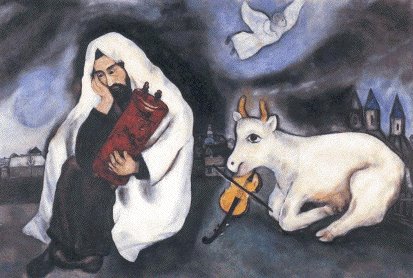
Loneliness , by MArc Chagall
Stephen Halper & Jonathan Clarke, AMERICA ALONE, The Neo-Conservatives and the Global Order (Cambridge University Press, 2004, pp. 369) is an interesting case of trans-Atlantic cooperation. Stephen Halper, an American and a Stanford graduate with doctorates from both Oxford and Cambridge, is a Fellow of Magdalene College, Cambridge, and director of the Donner Atlantic Studies Programme in the university's Centre of International Studies. He served in the White House and the State Department under Nixon, Ford, and Reagan. The book is therefore not written by Democrats with a visceral hatred of Republicans. Jonathan Clarke, an Oxford graduate, served in the British foreign service and is now a Foreign Affairs Scholar at the CATO Institute in Washington, D.C. Their timely book has been well received because it expresses the annoyance of US conservatives that power has been seized by a group of secretive neo-conservatives who have their own agenda for the new global order. There is a list of leading figures (p. 14) beginning with I. Lewis Libby, who has hit the headlines. Among those listed is WAISer James Woolsey. He is described (p. 29) as "like Gingrich, more an ideological fellow-traveler than a founding member". Wolfowitz said the campaign against al-Qaeda would involve "removing or ending states·" (p 204). "James Woolsey was even quicker off trhe mark, saying that Iraq should be the target". . Does he have any comment about the book? The financial network is described, with the Hoover Institution enjoying the patronage of the John M.Olin Foundation. Both Donald Rumsfeld and Condoleezza Rice are "Hoover alumni".
For WAIS, chapter 8, "America: Perception and Counterperception", has a special importance, since it documents the disparity between the US vision of itself anc the perception of it in other countries. Harsh criticism of America is nothing new, as is evident rom Frances Trollope, The Domestic Manners of Americans (1832). The excellent bibliography includes Paul Hollander, Anti-Americanism:Critiques at Home and Abroad, 1965-1990. The detailed index facilitates consultation,
This important book has created quite a stir. Its ultimate assessment will
depend on the turn of events. It discusses talk of a fourth world war, but
what that would involves is not quite clear. If the US succeeds in establishing solid governments in Afghanistan and Iraq, the neo-conservatives will boast that their policy was the right one. If not, this book will be regarded as prophetic. The danger is that, even though Afghanistan and Iraq may be stabilized, Iran will be there with its neo-conservatives and its president who wants to "remove a state". Then what will our neo-conservatives do, if they are still in power?
1.11.05
American Tragedy, by John Lapp

Last Friday we witnessed an explosion, an event that, like Watergate, will shape politics and the way we see government in America for years to come. This is a solemn time, and gives us a moment to remember what men can do when they abuse the power given to them by our nation. The first indictment was handed down in the investigation initiated by the CIA, and "Scooter" Libby, the right-hand man of the Vice President, faces five counts of perjury and obstruction of justice in connection with a profound betrayal of national security -- the outing of a covert CIA agent.
Karl Rove remains under investigation, and as Republican Senator Trent Lott put it this weekend, "If this is going to be ongoing, if he has a problem, I think he's got to step up, and, you know, acknowledge that and deal with it." It's easy to forget that President Bush long ago promised to fire anybody involved, a promise that undermines White House credibility every day Rove continues to work there.
The desperate spin and attacks from the Republicans have already begun, and we must remind America of the facts behind this case, and what makes these indictments so monumentally important. We've put it all into a video; we are asking you to watch it and spread the word by forwarding it to everybody you know:
Watch the Videohttp://whatcounts.com/t?ctl=F97F93:2AA074B
PS:
The White House announced on Monday the elevation of John Hannah to replace Libby as Cheney's national security adviser. Earlier in the day it announced that Libby would be arraigned Thursday in federal court on charges of perjury, making false statements and obstruction of justice. He was expected to plead innocent.
The White House also announced that David S. Addington, who's been Cheney's legal counsel, would assume Libby's duties as chief of staff. Like Hannah, Addington has played a quiet, though influential, role in the vice president's office. The Washington director of Human Rights Watch accused Addington of helping draft policies that led to the abuse of prisoners in Iraq and Afghanistan.
31.10.05
Todos os Santos - All Saints
 O Dia de Todos os Santos, 1 de Novembro, comemora os que tiveram uma vida santa sem serem oficialmente reconhecidos pela Igreja, e o Dia dos Finados comemorou todos os restantes falecidos. Os nossos pais entram numa destas categorias. "A Minha mãe (ou o meu pai) foi uma santa(o)" podemos escutar a alguém ou a nós mesmos. Eu irei ao cemitérios depor flores nas sepulturas dos meus pais, uma expressão do respeito e saudade que tenho.
Os EUA transformaram a Véspera de Todos os Santos, na data no Halloween, com "ameaças e truques", com que os jovens vândalos quebram janelas e pegam fogo às casas. A festa transformou-se em grande negócio, em segundo lugar após o Natal em termos de vendas. Dois dias solenes do calendário cristão psssaram para os interesses comerciais. A combinação de divertimento e ganância entra na globalização cultural. A pesquisa do Google de All Saints fornece as garotas um pouco atrapalhadas que enciman este post. É assim...
Na UNESCO a França fez aprovar a 20 de Outubro uma resolução sobre a diversidade cultural, condenando a propagação do cinema americano como imperialismo cultural e por razões comerciais. Somente Israel votou com os EUA. Os EUA podem defender o Haloween como parte da sua herança cultural. Mas esperemos que os americanos não se esqueçam de lembrar nestas datas os seus pais e mães. Muitos também foram santos…
30.10.05
UNESCO 141 - EUA 2
António Lopes Ribeiro e Elias KAzan- Há espaço para todos ...
...
The world is ganging up on Hollywood.
In a slap in the face to the U.S., member states of U.N. cultural body UNESCO have voted to protect their film businesses against creeping globalization -- in other words, Hollywood.
The vote, a Franco-Canadian initiative, was passed by 191 states: Only Israel and the U.S, which recently rejoined UNESCO after a 19-year absence, opposed it. Four countries abstained, including Australia.
Move could spark quotas on film and music imports, particularly in countries like France, where, in the first nine months of 2005, U.S. pics took 57.4% of the market share while Gallic films took 37.4%.
The Convention on the Protection and Promotion of the Diversity of Cultural Expressions gives member states the right to act against what they see as encroachment on their cultural identity.
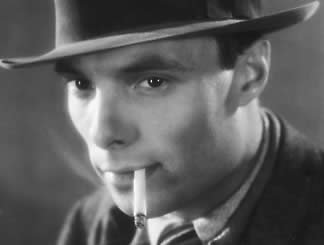
A cultura fica excepção na globalização. Não é o mercado que manda mas sim o Estado. Os interesses das indústrias cinematográficas nacionais ficam mais protegidos, dirão os sub-marxistas sofisticados que comandam o "pensamento único". Mas , se fosse só isto não seria melhor transformar essas indústrias em sucursais das americanas? Ao contrário dos sub-marxistas, penso que a cultura nasce do que experimentamos como telúrico. Em resumo; vale a pena aturar um Manuel de Oliveira para que um dia possa surgir mais um António Lopes Ribeiro...
 ...
...The world is ganging up on Hollywood.
In a slap in the face to the U.S., member states of U.N. cultural body UNESCO have voted to protect their film businesses against creeping globalization -- in other words, Hollywood.
The vote, a Franco-Canadian initiative, was passed by 191 states: Only Israel and the U.S, which recently rejoined UNESCO after a 19-year absence, opposed it. Four countries abstained, including Australia.
Move could spark quotas on film and music imports, particularly in countries like France, where, in the first nine months of 2005, U.S. pics took 57.4% of the market share while Gallic films took 37.4%.
The Convention on the Protection and Promotion of the Diversity of Cultural Expressions gives member states the right to act against what they see as encroachment on their cultural identity.
A cultura fica excepção na globalização. Não é o mercado que manda mas sim o Estado. Os interesses das indústrias cinematográficas nacionais ficam mais protegidos, dirão os sub-marxistas sofisticados que comandam o "pensamento único". Mas , se fosse só isto não seria melhor transformar essas indústrias em sucursais das americanas? Ao contrário dos sub-marxistas, penso que a cultura nasce do que experimentamos como telúrico. Em resumo; vale a pena aturar um Manuel de Oliveira para que um dia possa surgir mais um António Lopes Ribeiro...
19.10.05
After Fidel Castro , by Tim Ashby
Tim Ashby tells us about Fidelito, the son of Fidel Castro: If Raul survives Fidel, he will succeed the elder Castro, although I predict that a junta will actually wield power, probably including Alarcon, Lage and Valdes. The military will remain a potent force, but it is more concerned about managing the 65% of the Cuban economy it controls rather than taking over the government.
Randy Black is absolutely right about the truly dire economic conditions inside Cuba today. Fidel's putative successors are acutely aware of this and are eager to open up the economy to ease social tensions. Expectations will be heightened to a breaking point after Fidel's demise, and to stave off a popular revolution the next government will almost certainly seek to restore relations with the US, have the embargo lifted, open up Cuba to foreign direct investment, and allow Cubans much wider latitude to practice private enterprise.
"Fidelito'' - Fidel Castro Diaz-Balart (yes, a first cousin of the Cuban-American congressmen who are his father's bitter opponents) studied nuclear physics in the Soviet Union in the 1970s and subsequently served as executive secretary of the Cuban Atomic Energy Commission from 1980 to 1992. He divorced his Russian wife about 15 years ago and remarried a Cuban. Fidelito works as a consultant for the Ministry of Basic Industries. He reportedly lives quite modestly although he has a large security detail. Fidelito bears a striking resemblence to his father, yet is not considered to be Fidel's political heir. A US Interests Section diplomat told me that Fidelito went with some European friends to a popular Havana nightclub and was made to wait in aline outside with tourists. When one of Fidelito's companions asked why he did not invoke his father's name or order his security guards to get them inside, he shrugged and ! muttered "I can't do that."
Randy Black is absolutely right about the truly dire economic conditions inside Cuba today. Fidel's putative successors are acutely aware of this and are eager to open up the economy to ease social tensions. Expectations will be heightened to a breaking point after Fidel's demise, and to stave off a popular revolution the next government will almost certainly seek to restore relations with the US, have the embargo lifted, open up Cuba to foreign direct investment, and allow Cubans much wider latitude to practice private enterprise.
"Fidelito'' - Fidel Castro Diaz-Balart (yes, a first cousin of the Cuban-American congressmen who are his father's bitter opponents) studied nuclear physics in the Soviet Union in the 1970s and subsequently served as executive secretary of the Cuban Atomic Energy Commission from 1980 to 1992. He divorced his Russian wife about 15 years ago and remarried a Cuban. Fidelito works as a consultant for the Ministry of Basic Industries. He reportedly lives quite modestly although he has a large security detail. Fidelito bears a striking resemblence to his father, yet is not considered to be Fidel's political heir. A US Interests Section diplomat told me that Fidelito went with some European friends to a popular Havana nightclub and was made to wait in aline outside with tourists. When one of Fidelito's companions asked why he did not invoke his father's name or order his security guards to get them inside, he shrugged and ! muttered "I can't do that."
15.10.05
Fundamentalist or Radical? The al-Zawahiri letter
WASHINGTON (Reuters) - U.S. intelligence officials who released a letter purporting to be from an al Qaeda leader to insurgency leader Abu Musab al-Zarqawi this week said on Friday they could not account for a passage that has raised doubts about the document's authenticity.
Letter from al-Zawahiri to al-Zarqawi. October 11, 2005. ODNI News Release No. 2-05
Today the Office of the Director of National Intelligence released a letter between two senior al Qa'ida leaders, Ayman al-Zawahiri and Abu Musab al-Zarqawi, that was obtained during counterterrorism operations in Iraq. This lengthy document provides a comprehensive view of al Qa'ida's strategy in Iraq and globally.
The letter from al-Zawahiri to al-Zarqawi is dated July 9, 2005. The contents were released only after assurances that no ongoing intelligence or military operations would be affected by making this document public.
The document has not been edited in any way and is released in its entirety in both the Arabic and English translated forms. The United States Government has the highest confidence in the letter's authenticity.
Al-Zawahiri's letter offers a strategic vision for al Qa'ida's direction for Iraq and beyond, and portraysal Qa'ida's senior leadership's isolation and dependence.
Among the letter's highlights are discussions indicating:
* The centrality of the war in Iraq for the global jihad. * From al Qa'ida's point of view, the war does not end with an American departure. * An acknowledgment of the appeal of democracy to the Iraqis. * The strategic vision of inevitable conflict, with a tacit recognition of current political dynamics in Iraq; with a call by al-Zawahiri for political action equal to military action. * The need to maintain popular support at least until jihadist rule has been established. * Admission that more than half the struggle is taking place "in the battlefield of the media."
Letter from al-Zawahiri to al-Zarqawi. October 11, 2005. ODNI News Release No. 2-05
Today the Office of the Director of National Intelligence released a letter between two senior al Qa'ida leaders, Ayman al-Zawahiri and Abu Musab al-Zarqawi, that was obtained during counterterrorism operations in Iraq. This lengthy document provides a comprehensive view of al Qa'ida's strategy in Iraq and globally.
The letter from al-Zawahiri to al-Zarqawi is dated July 9, 2005. The contents were released only after assurances that no ongoing intelligence or military operations would be affected by making this document public.
The document has not been edited in any way and is released in its entirety in both the Arabic and English translated forms. The United States Government has the highest confidence in the letter's authenticity.
Al-Zawahiri's letter offers a strategic vision for al Qa'ida's direction for Iraq and beyond, and portraysal Qa'ida's senior leadership's isolation and dependence.
Among the letter's highlights are discussions indicating:
* The centrality of the war in Iraq for the global jihad. * From al Qa'ida's point of view, the war does not end with an American departure. * An acknowledgment of the appeal of democracy to the Iraqis. * The strategic vision of inevitable conflict, with a tacit recognition of current political dynamics in Iraq; with a call by al-Zawahiri for political action equal to military action. * The need to maintain popular support at least until jihadist rule has been established. * Admission that more than half the struggle is taking place "in the battlefield of the media."
Teorias do Imperialismo IV - Rosa Luxemburgo

Em 1913, ROSA LUXEMBURGO publica " A Acumulação Do Capital". Enfrenta o já então velho problema de todos os marxistas: saber porque não se realizou a previsão de Marx sobre a queda do capitalismo. Marx descrevera a acumulação do capital como um "sistema fechado"; mas havia sectores ainda não explorados pelo capitalismo. A falta de capacidade aquisitiva das massas empurrava cada vez mais o capital para as colónias, mesmo na sua maturidade. Esta necessidade aumentava a concorrência entre os países capitalistas e levava à guerra. Luxemburgo evidenciou o papel do militarismo. "Esta procissão triunfal do capitalismo em todo o mundo, acompanhada por todas as formas de força, roubo e infâmia tem um aspecto positivo: criou as premissas para a derrocada final, estabeleceu a autoridade mundial capitalista que será necessariamente sucedida pela revolução socialista mundial".
14.10.05
Voyage au bout de la nuit, por José Adelino Maltez
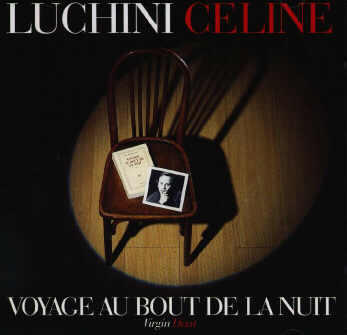
Em seguida, visito o chamado "Portal do Governo
Nome oficial - República Portuguesa (Mentira! A primeira palavra da Constituição é Portugal).
Fundação da Nacionalidade - 1143 (Mentira! A nossa autodeterminação data de 1140! Castela e o Papa ainda não mandam cá dentro!)
Instauração da República - 1910 (Deviam meter coisas bem mais profundas, optando entre 1820 e 1974...)
Sistema Político - democracia (Deviam dar um pedacinho mais de especificidade...mais de 95% dos países do mundo podem meter tal coisa, incluindo o Vaticano, por causa do conclave)
Símbolos Nacionais - Bandeira Nacional e Hino Nacional (Querem coisa mais de chefe de repartição? Que tal falar na armilar e nas quinas?)
Língua - português (existem também duas pequenas áreas onde se falam mirandês (derivado do asturo-leonês) e barranquenho. O português é ainda língua oficial noutros sete países e é falado por mais de 200 milhões de pessoas (Camões e Pessoa, apesar de não serem pós-modernos, dariam mais sal à coisa...)
12.10.05
Ao pé da janela de Miguel de Vasconcelos com Álvaro de Vasconcelos e José Calvet de Magalhães
 Mostrar os Dentes sem Rir
“ Durante os anos todos da minha carreira, nunca precisei de mentir” Embaixador José Calvet de Magalhães, Curso de Adidos de Delegação, em 1988
Diz-se que um Ministro dos Negócios Estrangeiros não é um Diplomata, no livro ”Conversas com José Calvet de Magalhães – Europeístas e Isolacionistas na Política Externa Portuguesa”, de Álvaro de Vasconcelos ( Bizâncio, Lisboa, 2005). Subentende-se também que um Diplomata não é Ministro pois não lhe cabe definir a Política Externa.
Ao longo de todo o livro, o falecido Embaixador Calvet de Magalhães mostrava opiniões muito marcadas sobre alguns personagens, polarizados em “isolacionistas” ou “europeístas”. Parece que – como se verá mais adiante – devido a um subtil paradoxo de ideias, que se preferiu discutir pessoas, com todos os riscos do subjectivismo. Mas a Experiência, por si só, ou não é Sabedoria, ou sabe esconder esta última muito bem e não é uma agenda geopolítica, com um pressentimento inquieto, quem a desoculta.
Dá-se no livro um conceito agressivo de nacionalismo, defendendo mesmo o entrevistado, a repressão de movimentos nacionalistas. Esquece-se o papel unificador e pacificador de muitos nacionalismos os quais, no livro, são livremente associados com tribalismo. Mais: as nações grandes teriam nacionalismos internacionalmente perigosos, enquanto as pequenas, tê-los-iam talvez perigosos só para si próprias.
O que é europeu é bom. Diz-se que o reino mouro de Granada tinha “muito de europeu”. Ora o Islão, desde Bali até à Sibéria teria muito em comum menos ser “muito europeu” mas se os Mouros foram expulsos de Granada, foi por alguma razão europeia que não lhes dizia respeito. Como os Almohadas e os Almorávidas, parcialmente gerados na Pérsia e na Mesopotâmia e que floresceram no Sul da Península ibérica, como os mouros negros que de lá foram até Veneza.
Álvaro de Vasconcelos lidera a conversa dizendo que, durante o Estado Novo, os inimigos do americanismo eram os mesmos do europeísmo e que, hoje, também são inimigos de Espanha. Ou seja: deixa induzir que, se formos europeístas hoje, seremos pró-espanhóis. Os salazaristas eram anti-europeus e, por isso, eram anti-americanos porque a Europa, em suma, é como a América.
Filipe II era português e Portugal sobreviveu a três reis espanhóis, diz-se. Pois. Filipe I de Portugal mandou matar um Almirante de seu nome de baptismo Diogo, que desembarcou da Índia, pouco depois, para impedir a usurpação da Coroa portuguesa. E permaneceu um personagem desconhecido, até quando, há alguns anos, um grupo de escultores, tentou erigir-lhe uma modesta estátua. Enquanto Carlos V falava espanhol com Deus, francês com as mulheres e alemão com os cavalos, Filipe não falava nem português, nem asturiano, nem catalão.
O entrevistado era contra a Europa da ponderação dos votos porque queria uma Federação de Nações, à americana, em pé de igualdade. Então como é possível federar se as Nações são tão más e o nacionalismo péssimo, sem que se faça um Directório? O entrevistado é, claro, um idealista. Mas Franco Nogueira também era, só que mais aguerrido. No Idealismo do entrevistado tudo é óbvio até o paradoxo, que ele confunde com Lógica, por ser claro. Confundir claridade com verdade é um erro antigo e entregar aos outros paradoxos bem formulados é uma arte retórica e cortante.
Mas Álvaro de Vasconcelos explica-lhe que a ponderação dos votos é importante para legitimar a Federação europeia. Pois é: a democracia pode agora transformar o Homem em Mulher, o feto em aborto e o abeto em cinzas. Diz muito bem Vasconcelos que estamos como alguns intelectuais lusos, na iminência das invasões francesas. Sim, podemos até chegar a estar como a Casa dos 24 na iminência da invasão espanhola, como os pomos de Adão dos notáveis de Lisboa ante a tesoura de Fernão Vasques, em 1385, ou Miguel de Vasconcelos perto da janela. Sim, ao contrário dos revolucionários republicanos de Nápoles, em 1793, como o Almirante Caracciolo que se lhes juntou quando já estavam perdidos, como Gennaro Serra Di Cassano ou a nossa “Lénor” Fonseca Pimentel que não esperaram pelos franceses para dar o cabedal ou que o deram definitivamente, mesmo depois dos franceses partirem. A questão é de carácter e não de política.
Os federalistas estão em dúvida.É que uma Nação se faz de luta, com carácter, em vontade e circunstância. Um Amor não acaba porque a Beleza passou.
As Nações não se medem aos palmos. Se o Embaixador (de quem guardo a mais grata memória e cujo exemplo - citado acima- me forneceu argumentos em situações difíceis da vida) achava óbvio que tudo o que era europeu era basicamente bom, talvez não se tivesse posto nos sapatos de Franco Nogueira. Assim talvez tivesse reparado no que este vira: nem tudo o que era nacional, era europeu.
Mas como poderia o Embaixador Calvet de Magalhães querer que as Nações europeias se federassem em pé de igualdade? Na América, os Estados tinham de americano e em comum a Idade da Pedra, enquanto na Europa da Reconquista, quem sabia grego eram não-euroupeus, circunstancialmente adiantados quatro séculos.
Em suma: os que querem fugir das determinantes nacionais, passam-nas em silêncio, outros são mesmo capazes de as deturpar. Uns dizem-se descomplexados porque não aprenderam a dançar. Os outro permanecem simples e herdarão a Terra sem precisarem de a federar.
No tempo de D. João V, um terço da população de Lisboa era negra. O Fado é uma canção de origens directamente africanas. Somos gregos e fenícios, romanos da diáspora, celtiberos que se estenderam de Marrocos à Líbia e Atlantes por pressentimento.
No livro, os interlocutores acabam por concordar que, se a Diplomacia é fazedora de Paz, a Política Externa também inclui a Guerra. Koffi Annan não diria mais. Mas já o clássico Harold Nicholson falava em “Kraftprobe” e “Shop-keeping” na Diplomacia, muito antes de se passar à Guerra, que foi assunto sobre o qual não discreteou.
Diplomacia não significa dizer apenas o que é agradável de ouvir, mostrar os dentes sem rir. Franco Nogueira foi um grande Diplomata, não nos queiram induzir o contrário.
O luso-tropicalismo não era a solução mas decerto que continua a fazer parte dela. Hoje, Portugal e Espanha não liderarão nenhum processo de ibero-americanismo, apesar das línguas de origem peninsular crescerem pela América acima, porque fizeram precipitademente uma opção europeia, cujos contronos não estavam definidos ( e assim permanecem). Contudo, a Latinidade não acabou com a tragédias como a de Mussolini.
Filipe II era português mas D. Miguel era espanhol, diz-se no livro. Pois, D. Miguel foi o líder porque D. Pedro era tão mau que foi reinar para o Brasil depois de ser corrido a pedrada pelo povo de Lisboa, e ter deixado apenas o coração, quando já ninguém o queria, no Porto. Insinua-se que Salazar era miguelista. Sim. E também o Povo que suportou Salazar, que cria em Spínola e que votou em Sidónio Pais ou em Eanes. O Rei é apenas uma forma de representação da Nação, entre outras, quando a Nação é, por si, já uma forma de representação. Mas esta, como outras formas de linguagem, não se votam ao dia, tipo preço do peixe na lota.
É bom pensar que Portugal é atlântico muito antes do que se pensa. Que somos fugitivos do Mediterrâneo a quem moderámos os impulsos frios e pagãos com as brumas de Avalon, com a ternura infinita africana e a sua inveja incendiária, pondo em tudo um Coração gaélico. Estas são as fontes puras de Portugal que nos reflectem e que não votámos. Atlânticos para além da Europa e Globais para além do Atlântico, como alternativa ao Mediterrâneo, além da Europa, num Mar sem fim.
Is Google taking over the universe? By Michael Bazeley, Mercury News



In a short, seven-day span recently, Google revealed plans to partner with
NASA on research, offered to provide free WiFi to the city of San Francisco and announced it would collaborate with Sun Microsystems in creating desktop software for office workers.
Seemingly every week brings a new announcement from the Mountain View Googleplex, each one bigger than the last and each provoking wide-eyed speculation -- and confusion -- about the 7-year-old company's ambitions.
Collectively, Google's unexpected ventures have elevated it into perhaps the most talked-about and influential company in the tech world. What Microsoft was to the PC era, Google is to the Internet era.
Speculation about its future abounds. Will Google blanket the Earth with free WiFi so it can serve targeted advertising to people and entice them into using its services? Will it upend Microsoft's business by releasing a Web-based competitor to Office? Is it headed to the moon?
``Their company mission is to organize all the world's information,'' said Peter Weck, chief technology officer with job search site Simply Hired. ``They take that seriously and in the broadest sense.''


11.10.05
Sampaio e a Corrupção; a Europa e a Turquia; Eu e Tu. Por André Bandeira

[Mudado de país, de posto e acompanhando a nova estação do ano, André Bandeira retoma as suas crónicas no Duas Cidades depois das eleições republicanas (ou republichinas) do 9 de Outubro.]
Chegou a bruma e vem o frio, no relógio e no calendário. Mesmo que o sol brilhe e as temperaturas sejam altas, os relógios de ponto vagueiam como um risco na superfície de um lago.
O Eu, como ilusão de refúgio, o Eu como um ponto de fuga que escape ao paradoxo Kantiano insolúvel de outros Eus e que os abafa pela vertigem e pelo barulho. O som e a fúria.
O Eu, ponto fictício. Quanto mais eu, mais vazio, quanto mais vazio, mais fraqueza, quanto mais fraqueza, mais mal. O vazio espraia-se com a descida das águas. Tudo é possível e impossível ao mesmo tempo. Todos correm aos títulos para sobreviverem e o pânico do vazio que inunda o fim da tarde nunca gerou tanto ressentimento e tanto ódio. Os Títulos como “dôtô” ou “Directô” são pequenas libertações de ar belicosas, de peitos tensíssimos e o “eu-eu” , ao fundo, é como um latido despeitado.
Sampaio fala da corrupção, como um Tu a que todos se poderiam dirigir mas que já não tem autoridade pois, cego, não vê o seu próprio Eu socialista, silencioso, de boca cheia e mãos sujas. O eu socialista misturou-se no Nós, nostra, cosa nostra. Sampaio prega no deserto, cego, e desfasado, pela luz dos holofotes, pelos brilhos do orvalho jornalista.
Três arguidos, três mulheres de César foram reeleitos. Em Parvoar mandam os parvoeiros, e os irmãos Escobar, em Medelin, na Colômbia, também resolviam os problemas do dia-a-dia.
Mas a corrupção começou na carne. Noticias vertiginosas, cenários mundiais diferentes todos os dias fazem dos sentidos uma loucura miudinha, de espasmos, de fomes, de esvaimentos e pululares répteis.
Deve ser de novo, um Homossexual masculino quem comanda. Com a masculinidade em desvario, que troca o duelo original pelo xadrez de quem fica ou não fica por cima.
De tanto esperar, a liberdade já se rasga e seca. A bisnaga deixa de ser a cornucópia das abundâncias para se no incauto espetar como um detrito de metal.
Mas o Mundo quer ver o fundo ao tacho. A mãe, sem pai ao comando, defende o filho, que é bonito ( e os Homens não se querem bonitos). Com tantas promessas de fim da História e Paraíso na Terra, ninguém é capaz de se levantar de manhã sem ter arrecadado algo. A Morte, claro que há-de vir mas o que todos querem é honrarias e pedras preciosas. Ah, isso da Morte trata-se depois com os Seguros.
Não, Macbeth não sacia a sua sede de sangue. Nem o furacão o demove, porque nele dançam as bruxas e o vodu branco floresce. Continuemos onde tínhamos ficado: se “guerra” fria não é guerra, voltemos ao ponto em que os russos se espraiaram pela Europa e abandonaram o Irão, quando ainda não tinham forças para comprar beduínos, pretos, índios, bonzos e paxás
O homossexual masculino que comanda já se sujou tanto que a água onde mergulha vira sangue. Tanto se escondeu que só nos resta, para salvar o danado, sair a rua, de corda ao pescoço e dizer” Eu sou homossexual também! Eu sou o pior dos pecadores!”. Aí podemos como no belíssimo filme “Jacob, o Mentiroso” ( o melhor papel de Robin Williams) ser mártires de mentira na mão, em nome de uma verdade inapreensível. Talvez só assim possamos restaurar o verdadeiro Amor, um Amor de Homem pela Beleza sem fim, sempre virgem, e pura e digna. O Amor que guia o Cavaleiro andante, por entre a floresta de espinhos, trespassando o dragão como o Sol rompe entre as nuvens.
Este feminino e este Masculino balizam a nossa breve passagem pela Terra. Benditos os amantes infelizes, os esposos desapontados que ainda puxam o cobertor sobre o filho adormecido, os namorados pobres, os enjeitados valentes. Bendito o que é rejeitado e ainda se ajoelha em louvor, bendito o que há-de amar uma pedra.
Porque desta cisão, desta tragédia renasce o direito e o esquerdo, o alto e o baixo, o perto e o longe. Bendito o desejo ordenado, bendito o espontâneo que salta, benditos os que alinharam de madrugada.
O Mundo não deixará de ser o que é, só porque as nossas mentes se distorcem de pesadelo. Ele é conduzido humildemente por S.José que conduz a Providência, que é mula, tenaz e humilde, levando o nosso Rei e Sua Mãe à garupa.
10.10.05
US' quandary: An answer to Randy Black - MCH
To put it briefly, I accept Randy Black’s caveats about Gen. Odom; maybe he is wrong in his conclusions. Yet, I absolutely sustain Gen. Odom’s diagnosis. “The [Irak] war was never in the U.S.' interests and has not become so”.
If, ever, was a rule of thumb for empires, I would risk one. “There is one moment when, as imperial interests go wild they become contrary to originary national interests.” When did Napoleon experienced the ill-will of the French? Why did Alexander turned back at the Indus? Why did Hitler experienced the “20 Juli” revolt from the Wehrmacht officers?
Now, these examples are from the past, an affirmation which is not exactly a solecis; it enhances the fact that we are living in an unprecedented situation. Traditional empires had adversaries and they were supposed to confront them with all hardpower at their disposal. “Terrorism” is not an actor; Al Qaeda is significant but it not the Wehrmacht neither the Japanese Imperial Navy. [Incidently, Randy Black’s alusions to US-induced democracy in Japan and Germany miss the point as Germany had a liberal Constitution since the 1848 Revolution and Japan showed an extraordinary adaptation to liberalism since the Meiji era. There is not this kind of preconditions for democracy in Middle East.]
Back to my point, the US benefit presently from an undisputed leadership in the world stage and they deserve it as the “ land of the free”, to put it in a benevolent way. Now, “the land of the free” can not become an empire because it does not desire it neither is programmed for it. The quandary is obvious. The United Sates arrived at the tragic state of their existence as a political community. European nations experienced it long ago: when you do not have where to go, you must sort it out inside yourselves; that was the experience of European major wars that become global wars. The European Union was conceived to put an end to 714 Peace Treaties of European history….as the polemologist Gaston Bouthoul says.
Now the US have this kind of problem as their relationship to international law has become problematic. Increasingly, the US is using various mechanisms in its domestic legislation, administration, and judiciary, to weaken the role of consent in international law and to enlarge the scope of unilateral decision. The blunt distinctions between States, such as democratic and non-democratic, and the labelling of “rogue” and “failed” states belonging to the ‘the axis of Evil is part of a “pecking-order” criterium and not of International Law. In many cases US predominance translates into treaty law through negotiations, sometimes with threats of sanctions. David Westbrook called attention to Michael Byers and Georg Nolte’s compilation of the Goettingen Seminar “ United States Hegemony and the Foundations of International Law”. We can find there an excellent assessment of US’s quandaries from “a more animated than usual” International Law approach.
Here, I am just trying to convey a feeling, not a political science theorem, qed.
9.10.05
Quem é realista nas relações internacionais?
Com tanto ideólogo auto-designado “realista” a escrever sobre relações internacionais - quand são, de facto, “realistas do poder” – é saudável que se reaprecie o estatuto actual do direito internacional.
1. Em primeiro lugar, " o direito internacional existe?." Este é um velho problema. Se o direito internacional for compreendido em termos positivistas, como ordem do soberano, apoiada por uma sanção, então não existe. Mas não podemos ser tão estritos. Enquanto matéria jurisprudencial, e matéria prática, o direito internacional é um facto. As relações globais são possíveis mediante a observância de regras formais e obrigatórias a que chamamos o direito. Infelizmente, como disciplina académica o direito internacional construiu-se como uma refutação da acusação de que “não existe”. A energia que os juristas gastam nesta refutação é suspeita. Seria melhor um pouco mais de filosofia política para ver que a visão geral do direito internacional,é uma questão de grau e não de “ser ou não ser”.
2. Em segundo lugar, o direito internacional teve êxito no seu projecto do século 20 de regulamentar o uso da força? É o que se tem em mente quando se diz mal do direito internacional. O tratado de Versalhes, o Pacto de Briand/Kellogg, e a Carta da ONU foram esforços de usar o direito para terminar a guerra. Esforços…hum… menos bem sucedidos. O esforço de estabelecer um direito eficaz da guerra (ao contrário de uma teoria da guerra justa), não teve êxito. E agora? Que fazer? Redobrar de esforços? Manter a existência do direito, e a viabilidade da Carta, apesar das falhas frequentes? Desfazer-se de tudo? Manter uma hipocrisia séria?
A confusão actual é grande como se observa no excelente livro editado por Michael Byers e Georg Nolte, da University of Göttingen, (RFA) United States Hegemony and the Foundations of International Law. Cambridge, 2003. Como dizem os autores, esteve para terminar co9m um jantar de confraternização em Goettingem e acabou com um debate cruel. Eu gosto particularmente dos comentários de Maarti Koskenniemi, o mesmo autor de O suave civilizador das nações, uma história do projecto legalista, isto é, o esforço de criar a paz pelo direito segundo o velho modelo liberal (a compreensão "westfaliana" do direito internacional, após 1648, no fundo a época de Grócio). Contudo, Maarti detém-se ao redor de 1960. Assim “não vale”; e, como disse em post anterior, o livro é mais intelectual que prático.
Entre os americanos que acreditam no direito internacional – e são muitos - há académicos como Michael Glennon, de Harvard, e David Kennedy e Anne-Marie Slaughter, de Princeton e advogados internacionais como Abe Chayes. Consideram que a Carta da ONU falhou na tentativa de criar um direito internacional obrigatório para o uso da força – como escreveu Michael Glennon, em Limits of Law, Prerogatives of Power: Interventionism after Kosovo. Palgrave MacMillan, 272 pages e mais recentemente em “Why the Security Council Failed”, Foreign Affairs, May/June 2003. Nenhum deles é ideólogo como os auto-designados “realistas” das relações internacionais.
3. Terceira área de disputa. “Pode o direito internacional ser um projecto idealista? Se houver "Paz no mundo" -- onde é que eu assino? Nestas áreas campeiam as desilusões como em Koskenniemi e ainda Anthony Anghie, cujo livro Imperialism, Sovereignty and the Making of International Law, Cambridge, 2005, é inovador. Anthony Anghie, da Universidade de Utah, argumenta que o confronto colonial foi decisivo na formação do direito internacional e no seu conceito fundamental, a soberania. A crítica destes autores não é que o direito internacional não exista, mas sim que, como sempre sucede nas paragens jurídicas, a linguagem é tão distante, alienante, modernista, e liberal que poucos a entendem menos usam e acaba por beneficiar o status quo. Deixo para depois a apreciação de From Apology to Utopia, de Martti Koskenniemi, recentemente reeditado (2005).
8.10.05
General Odom may be wrong; por Randy Black
Randy Black writes: I would caution Mendo Castro Henriques against putting too much credence in the writings of retired General Odom. The saboutme man (Odom) said in the New York Times in 1999: "Some leaders in Moscow, generals as well as nationalist politicians, may see the war (in Chechnya) as a chance to reassert Russian control over the entire Caucasus. But the economic implications for Russia are devastating. A war of even a few months would cost more money than Russia will get in loans from the International Monetary Fund this year.
Perhaps the war will fizzle out. Maybe the generals will run out of energy and resources. If it continues, however, a prediction Mr. Shevardnadze made in 1993 may prove all the more relevant. Angered that Russia was aiding the secessionist movement in the Abkhazia region of Georgia, he warned Boris Yeltsin that the strategy would backfire, fragmenting the Russian Federation. Soon enough, the Russians lost control of Chechnya. This time, they may risk losing a lot more.
(Russian still controls Chechnya in 2005. Georgia is relatively stable.)
In the fall of 1998, Mr. Odom argued against IMF loans to Russia on the pretext that they could never pay back the loans. (They did, years ahead of schedule)
In his numerous writings, Mr. Odom claims that the USA cannot ever establish any form of democracy in countries it occupies. (Do Germany and Japan come to mind? It occurs to me that the USA continues to occupy both nations and that "forms" of democracy continue to flourish therein.)
Don't misinterpret my comments, I'm simply passing along facts. Mr. Odom is obviously an experienced and smart guy, but like many others, he offers opinions as do psychics. Some of his prognostications hit the mark. Other do not.
Sources: <http://www.hudson.org/index.cfm?fuseaction=publication_details&id=422">http://www.hudson.org/index.cfm?fuseaction=publication_details&id=422>http://www.hudson.org/index.cfm?fuseaction=publication_details&id=422http://www.hudson.org/index.cfm?fuseaction=article_detail&id=1215&CFID=2321326&CFTOKEN=16129215
Perhaps the war will fizzle out. Maybe the generals will run out of energy and resources. If it continues, however, a prediction Mr. Shevardnadze made in 1993 may prove all the more relevant. Angered that Russia was aiding the secessionist movement in the Abkhazia region of Georgia, he warned Boris Yeltsin that the strategy would backfire, fragmenting the Russian Federation. Soon enough, the Russians lost control of Chechnya. This time, they may risk losing a lot more.
(Russian still controls Chechnya in 2005. Georgia is relatively stable.)
In the fall of 1998, Mr. Odom argued against IMF loans to Russia on the pretext that they could never pay back the loans. (They did, years ahead of schedule)
In his numerous writings, Mr. Odom claims that the USA cannot ever establish any form of democracy in countries it occupies. (Do Germany and Japan come to mind? It occurs to me that the USA continues to occupy both nations and that "forms" of democracy continue to flourish therein.)
Don't misinterpret my comments, I'm simply passing along facts. Mr. Odom is obviously an experienced and smart guy, but like many others, he offers opinions as do psychics. Some of his prognostications hit the mark. Other do not.
Sources: <http://www.hudson.org/index.cfm?fuseaction=publication_details&id=422">http://www.hudson.org/index.cfm?fuseaction=publication_details&id=422>http://www.hudson.org/index.cfm?fuseaction=publication_details&id=422http://www.hudson.org/index.cfm?fuseaction=article_detail&id=1215&CFID=2321326&CFTOKEN=16129215
Subscribe to:
Posts (Atom)